Showing posts with label development. Show all posts

Wednesday, December 03, 2014

Wishing I can get into real estate

Photo via Curbed Chicago
If only I had enough money to get into real estate. I would like to do rehab a house the way this greystone on the north side of Chicago had been. It's either that or build a house exactly the way this greystone was rehabbed.

As the "blogmaster" for The Sixth Ward I've followed real estate in the often beleaguered south side neighborhood of Englewood. Recently there were information on a vacant lot program which allowed Englewood neighbors in a pilot program to purchase and close on vacant lots there. The cost wasn't entirely cost prohibitive.

It's certainly cost prohibitive to build on those lots if that's what you chose to do with them. At the same time it's not necessary to build on those lots although if I was able to purchase a lot that's exactly what I would like to do. If nothing else until one gets the capital to build anything it's OK to turn these lots into oases instead of lots where weeds would grow and trash would collect.

Of course Englewood isn't the only neighborhood in Chicago where such a program is necessary. And who knows perhaps I'll have the luxury of buying a lot in the future and hopefully build the house I want to build. Or more likely have some property when a neighborhood turns around.

I mention Englewood because I'm starting to believe it's on the cusp. With a major CTA rail line and then a Whole Foods Market coming to such an impoverished neighborhood it seems very likely.

Now to start getting ready to get into real estate.

Friday, May 23, 2014

JPMorgan Chase to invest $100M in Detroit


[VIDEO] So a major US bank is coming to the rescue for Detroit, coming to that troubled city with lots of money to spend:
Detroit's revitalization hopes are getting a boost from one of the deepest-pocketed players in U.S. finance.

JPMorgan Chase, the nation's biggest bank, will announce Wednesday that it is investing $100 million in Detroit over five years, strengthening the city's redevelopment efforts, speeding up blight removal, helping train city residents for new jobs, and making mortgage money available for home loans.

About half the cash will come in the form of loans and the rest in grants. Chase has been working for several months developing the program, which will be announced Wednesday at a luncheon featuring Gov. Rick Snyder, Mayor Mike Duggan and JPMorgan Chase Chairman and CEO Jamie Dimon.

Dimon told the Detroit Free Press that the idea started last fall when Detroit was going through its painful bankruptcy.

"Obviously Detroit was having issues," Dimon said. "I got together some of our senior people and said what can we do that's really neat, that could be really creative."

Chase is already a leading Detroit lender to consumers as well as to businesses.
Above Chase CEO Jamie Dimon is being interviewed on NBC's Today program. This is certainly good news for Detroit.

Friday, February 07, 2014

So Detroit had made a bid for the 1968 games


While it appears that the winter olympics is about to start in Sochi, Russia this year Curbed Detroit took a look at plans for the 1968 summer olympics in Detroit. Unfortunately it didn't happen for them, but it pays to dream I suppose. What would've been if the Motor City had gotten the games?

BTW, ultimately for the 1968 Summer Games Detroit had lost out to Mexico City. As noted by Curbed the Mexico City games were noted by the Black Power salute of medal winning members of the US Track & Field team.

Monday, December 09, 2013

Guardian: Rand Paul goes where other Republicans won't, even Detroit

[VIDEO] Last week US Sen. Rand Paul (R-KY) appeared on Hannity to offer his solution to the bankruptcy of Detroit (that's the vid you see above). The question is whether or not Detroiters would be willing to listen to such a solution that could bring the city back. Who says that the city has to be bailed out by the federal government?

Detroit somehow has to be brought back and it doesn't take a bailout, it takes her own people. It also takes bringing in people who want to revive Detroit's economy. You see a bit more from the Guardian
Paul, the junior Republican senator from Kentucky and Tea Party leader, is announcing his own rescue plan at the Detroit Economic Club today. It's a city he doesn't represent in Congress, that doesn't contain many likely Paul voters for 2016, and has been dominated by an automobile industry Paul was against bailing out.

Paul emphasizes that his plan for Detroit isn't a taxpayer-funded bailout either. Instead he would make the city an "economic freedom zone", slashing taxes and regulations rather than shoveling federal largess. He would eliminate the capital gains tax and provide incentives for entrepreneurs to relocate to Detroit in order to create jobs.

The senator admitted his proposal amounted to "enterprise zones on steroids", an homage to Jack Kemp, a Republican who sought to bring supply-side economics – and robust growth – to the inner city.

In one sense, this isn't new. Kemp long argued that tax cuts, deregulation, and the proliferation of small business were the real keys to urban renewal and a more lasting foundation for prosperity. Ronald Reagan hoped to send blacks and blue-collar white industrial workers a message by accepting the Republican presidential nomination in Detroit in 1980.
Of course the article further notes whether or not this could gain Republicans "minority" votes since Detroit is overwhelmingly Black. All I can say is good luck with that although a different solution needs to be tried. Still check out this paragraph:
But these kinds of breakthroughs cannot be achieved unless they are tried, however haltingly or imperfectly. At a bare minimum, Republicans need to appear willing to leave the comfort zone of their own constituencies and aspire to more fully a party for all Americans. If Richard Nixon could go to China, then certainly Rand Paul can go to Detroit.
Well, this I can agree but let's hope no Republican will go to Detroit trying to act like they know what's best. Maybe they can find someone who would utilize these "economic freedom zones".

Tuesday, October 15, 2013

More videos picking on Detroit...


[VIDEO] On Sunday, CBS' 60 Minutes took a look at Detroit and the many people who are doing their part to save this city and some frustrated citizens and firefighters. We see the vacant Detroit neighborhoods, and the very vibrant downtown which is largely owned by the owner of Quicken Loans Dan Gilbert!

BTW, Curbed Detroit noted Gilbert's tweet about this story. He wasn't very happy and believed the story they should've covered was "A city’s soul that will not die was the story & they missed it". It was evidenced in this story even if it wasn't entirely positive.

Below is another video that I wanted to share with you from Reason.tv!

Thursday, September 26, 2013

Reason: Belle Isle Commonwealth: #Anarchy in Detroit


[VIDEO] You know this video should be tipped to Curbed Detroit that is part of a localized network of sites that keep an eye on real estate in many of our major cities around the nation. What you see above courtesy of Reason.tv definitely is real estate related.

I've actually visted Belle Isle four years ago. There was a family reunion in Detroit and I just so happen to visit and a picnic was held on this public park. It's very unique and beautiful.

The vision shown here while very appealing it should be just as possible to turn the various vacant neighborhoods that seem to exist in Detroit into this "Singapore" desired by the man who wants to develop Belle Isle. In fact many of our cities have neighborhoods that we should turn into a "Singapore".

This brings to mind something that was thought of years ago but that's for another post.

In the meanwhile, it's time to pay attention to any site that shows attention to what's going on in that beleaguered great American city!

Hat-tip Newsalert!

Friday, June 14, 2013

On Tuesday, took a stroll near the United Center

Near Madison/Paulina
A day before the Stanley Cup Final series commenced between the Chicago Black Hawks and Boston Bruins, I decided to go by the United Center (UC). I took a number of photos on my phone near there and posted them to my instagram (@levois).

I was under the Paulina Connector that routes CTA Pink Line trains towards the Loop via Lake Street. Until recently it was a rarely used piece of antiquated rapid transit infrastructure until it was again commissioned into revenue service. It was once part of services once provided by the Metropolitan West Side Elevated Railroad.

There are some redevelopment plans by the primary tenants of the UC - who just so happen to be not only the owners of the Chicago Black Hawks, but the Bulls as well - which cause me to want to consider this piece of infrastructure under the Paulina Connector. There ought to be an L stop right here and CTA has been adding stops on the system recently a stop was added along the Lake Street Branch and one up on the Skokie Swift branch.

Currently you'd have to take a bus directly here for any events there. You'd probably could take a train and then switch for a bus that will take you here or otherwise be prepared for lots of walking. Back when the Paulina Connector was a much busier route there was a station there at Madison.

So if the need to redevelop this area with not only a training facility for the Chicago Bulls, but also a entertainment complex to contain retail and dining perhaps an L stop here wouldn't be a bad bet. There are no plans currently to do so, but let's hope that in light of these new plans CTA will fast track a future station here.

Tuesday, February 05, 2013

New Geography: Detroit future city


Today we're taking another virtual trip to the great American city of Detroit. Aaron Renn who writes for The Urbanophile wrote this column for New Geography about plans to redevelop Motown. Some of these plans we should know about already because it has gained attention in the past:
Recently the Detroit Works Project released their long awaited strategic plan for the city. This is the one led by Toni Griffin that produced a lot of public controversy because of suggestions it would result in the planned shrinkage or decommissioning (or even forced residential relocations) in sparsely populated neighborhoods.

Called “Detroit Future City,” this plan doesn’t shy away from facing the tough realities that face Detroit, but its recommendations are somewhat muted with regards to shrinkage. Nevertheless, the message is clear: in a broke, declining city, neighborhood triage is a must.

The full document is 184 pages. I perused it, but wasn’t able to review at the level of detail I normally like to. Partially this is because it was published in a hyper-annoying “cinemascope” type format that makes it almost impossible to read on screen without magnification and lots of horizontal scrolling. This aspect of the plan’s publication was an immediate knock against it in my view. However, it will share a few observations I gleaned.
Basically they're planning for a city around 600-800,000 people. Also what many should have heard about what to do about largely vacant neighborhoods. Of course in all this, the goal I'm sure is to find a way to reinvent Detroit.

Sunday, January 06, 2013

A drive along 63rd - from Englewood to Woodlawn

Originally posted to The Sixth Ward on January 4, 2012 


[VIDEO] The vid above is from one of my long time YouTube favorites, artistmac. He takes a drive along 63rd Street  from Morgan Street all the way to Stony Island an sure to note how the individual neighborhoods once grew along that corridor.  63rd & Halsted was once a bustling commercial district in Englewood and then the area around 63rd & Cottage Grove was also a bustling commercial area in Woodlawn. Both areas are now mostly vacant lots although some redevelopment has occured in those areas.

In fact on East 63rd just past the Cottage Grove terminal of the CTA Green Line some single family homes have been built. Artistmac didn't want to get into the politics on the video of how the Green Line abruptly ended at Cottage Grove when it used to terminate as far east as Stony Island. Sometimes I wonder if cutting the L beyond its current terminus was a huge blunder!

On West 63rd, Kennedy-King College was built within the former 63rd/Halsted business district and is still waiting for even more development. While it seems more likely Woodlawn could be redeveloped given the fact that the University of Chicago is slowly but surely expanding south beyond the Midway Plaisance, time can only tell for Englewood.

Artistmac does provide one omnimous conclusion: "Unless those middle-class residents can be enticed to come back to Woodlawn, Bronzeville and Englewood, I doubt those neighborhoods, or any of Chicago's declining neighborhoods, can be brought back to life."

Monday, November 14, 2011

Where some can only see a desert...


[VIDEO] ...others can actually see an oasis. Bill Whittle is back to talk about the success of Western Civilization. Whittle starts with comparing the Israelis with their Arab neighbors. The Israelis have largely developed their nation while according to Whittle most of the surrounding Arab nations are still mostly desert.

It brings to mind this documentary produced by Protest Warrior. The clip I'm linking is from a much larger documentary entitled - Entering Zion. It underscores the point of how the Israeli nation was developed although they also explore life in various settlements in occupied Arab lands outside of Israel's borders.

Want to learn more about them read their Manifesto and here's a great quote:
The Muslim world could decide tomorrow to stop the war against the West. The Arabs have six million square miles of land with an ocean of oil beneath it. They have their two holiest cities, Mecca and Medina. They could give their Palestinian brothers a state tomorrow (in addition to Jordan, which is 70% Palestinian), give every one of them a bar of gold and beach front property in the Sinai, or vast tracts of land in the Fertile Crescent that would dwarf the West Bank and Gaza. Between the Arabs' oil wealth and Israel's scientific skill, the entire Middle East could be a thriving hub of culture, commerce, and life, not death. My God, how the desert would bloom.
The Israelis see an oasis, but the Arabs see a desert. One day the Israelis and Arabs will see a desert.

Of course in light of what Whittle discusses in the video above this could apply in any situation. My interest currently is blogging about the neighborhood where I live. Where many can only see ghetto, I can very much forsee a vibrant, thriving, and safe neighborhood. This could describe many in not only Chicago, but around the nation.

All it takes are the five qualities noted by Whittle: imagination, ambition, skill, work ethic, and perseverance. To persevere is a very important quality especially if you face very discouraging odds!

Friday, April 22, 2011

Rehabber wants to grow grapes, make wine in sweet home Chicago

 
[VIDEO] This is a fascinating idea. Turning an abandoned, boarded-up landmark home into an urban vineyard to grow grapes and make wine. In addition to teaching people how to make wine. I'm giving great credit to the young man well he's not so young any more who wants to make that a reality.

BTW, here's more about this historic landmark referred to as the Raber House located at 5760 S. Lafayette Ave.
Bill Lavicka's renovations have always been unusual. The veteran rehabber and owner of Historic Boulevard Services has trucked four buildings intact from one site to another, converted small churches into homes, remade entire Near West Side blocks and showcased his quirky aesthetic by topping spires and balusters with bowling balls.

But the next remodel he has his heart set on raises the bar on unusual. Lavicka wants to turn a boarded-up Washington Park mansion, one of the city's last surviving examples of a multiacre country estate, into a winery.

And he doesn't want to import the grapes.

He wants to plant about 5,000 vines in the yard — what's now three or so bombed-out-looking blocks along the Dan Ryan Expressway just south of Garfield Boulevard.

Complicating matters, the vacant land and long-neglected mansion are owned by the city of Chicago. For nearly two years, Lavicka, 66, has been trying to persuade the city to sell 40 to 50 lots that were once part of the John Raber estate to him for $1 each, plus commit to streetscape and road improvements, and subsidize part of the renovation in some way.

Ald. Willie Cochran said Wednesday that he is "confident this deal will get closed," saying the winery would be approved along with an adjacent urban farm and new park with a baseball field. But details remain to be ironed out, and those will have to wait for the new mayor's input, he said.

The project, Lavicka said, has taken longer to plan than it would take to remodel.

"I probably like the buildings more than wisdom would allow, or should allow," Lavicka said as tears began to fill his eyes. "I can take an old building and fix it up, and everybody else goes by for years and years saying knock it down."
I hope this can happen. I'm all for finding creative ways to revitalize urban areas. Just another plan for an urban farm in an area with land that well real estate developers haven't discovered yet.

Via Bill Baar!

Thursday, September 23, 2010

Detroit Lives

Today through a series of videos, Johnny Knoxville (you should know him from this show Jackass) made a trip to Detroit talking to a number of people who are attempting to bring that city back. Well back from the general image of urban decay. They are produced by Palladium Boots and looking directly at their website, I don't think they're in the film industry. The Urbanophile (who gets the hat-tip) surmises that those vids are merely a promotional tool.

Friday, September 10, 2010

A Detroit District Thrives by Building on the Past

Thanks to the NY Times we're taking another virtual trip to that great American city of Detroit. Of course depending on how you view Detroit it's not so great and it's no stretch to say that great city is struggling to find itself these days. Anyway, what about building on the past in this Detroit neighborhood:
In sharp contrast to the rest of the Detroit metropolitan area, an area known as Midtown just north of the central business district has been holding its own in the recession.

Much of the success of Midtown — as it was branded a decade ago — is a result of the strength of institutions like Wayne State University, the Detroit Medical Center, the Henry Ford Hospital and the Detroit Institute of Arts, all of which contribute students and employees as well as residents.

Another component of Midtown’s success is that its developers are refurbishing older buildings, using tax credits and public financing, as much as they are building from scratch.

“For a long time, there was a big effort to tear things down in Detroit,” said Michael Poris, a principal of the architecture firm McIntosh Poris Associates, which is restoring a former vaudeville house in Midtown for multiple uses. “But if we have all these great historic buildings here, why not take the historic tax credits and reuse them? Plus it’s a greener, more sustainable form of development.”

According to the CoStar Group, a real estate information company in Bethesda, Md., the vacancy rate for office space in Midtown — including an adjacent area called New Center, where the former headquarters of General Motors now houses state offices — stood at 8.2 percent in the second quarter of this year.
...
“We really have lost almost no businesses during the recession,” said Susan Mosey, the president of the University Cultural Center Association, an organization formed by several Midtown institutions that guides development in the area. “That isn’t to say that businesses haven’t had to reduce costs and become more efficient, but the neighborhood’s remained pretty stable.”

The housing market is thriving too, Ms. Mosey said. Many obsolete buildings in Midtown have been converted to rental housing in recent years, and the rental market has been strong. An association study found that 92 percent of the 4,295 rental units in the area were occupied last spring.

A handful of condominium projects begun right before the national housing market collapsed had to shift gears and become rental apartments. Those were leased quickly, Ms. Mosey said.
...
Preservationists had the foresight to get much of Midtown designated as historic in the 1990s, thus ensuring they would be eligible for tax credits, said Diane Van Buren, vice president of sustainable planning at Zachary & Associates, a property development and development consulting group.

Zachary & Associates, with several partners, is in the process of creating an area within Midtown called the Sugar Hill Arts District, in tribute to the traveling black jazz musicians who once played in clubs and stayed in stately homes in the neighborhood, Ms. Van Buren said.

Much of the district was destroyed in the urban renewal movement in the mid-20th century that displaced many African-American neighborhoods in Detroit and elsewhere, she said.

Several buildings and sites in Sugar Hill are being redeveloped, including 71 East Garfield Street — the former site of a hotel that was destroyed by fire — which has undergone a $6 million renovation into 22 live-work spaces for artists and eight commercial spaces.
I probably excerpted a lot more from this article than I should of, but this is an interesting article that is worth your time. Not all is bad in Detroit and there are people there - oustide of the political establishment - who are working to rebuild Detroit. Finding your groove of course takes lots of time.

Hat-tip Urbanophile which also has a post up about how Detroit can market itself.

Wednesday, January 06, 2010

No Longer Majority Black, Harlem Is in Transition

I've been hearing rumbles about this for years. Harlem may remain the capitol of black America, but other peoples may decide that this is the place for them. The future may be other people moving in and turning a neighborhood around.

From NY Times:
For nearly a century, Harlem has been synonymous with black urban America. Given its magnetic and growing appeal to younger black professionals and its historic residential enclaves and cultural institutions, the neighborhood’s reputation as the capital of black America seems unlikely to change soon.

But the neighborhood is in the midst of a profound and accelerating shift. In greater Harlem, which runs river to river, and from East 96th Street and West 106th Street to West 155th Street, blacks are no longer a majority of the population — a shift that actually occurred a decade ago, but was largely overlooked.

By 2008, their share had declined to 4 in 10 residents. Since 2000, central Harlem’s population has grown more than in any other decade since the 1940s, to 126,000 from 109,000, but its black population — about 77,000 in central Harlem and about twice that in greater Harlem — is smaller than at any time since the 1920s.

In 2008, 22 percent of the white households in Harlem had moved to their present homes within the previous year. By comparison, only 7 percent of the black households had.
...
Harlem, said Michael Henry Adams, a historian of the neighborhood and a resident, “is poised again at a point of pivotal transition.”

Harlem is hardly the only ethnic neighborhood to have metamorphosed because of inroads by housing pioneers seeking bargains and more space — Little Italy, for instance, has been largely gobbled up by immigrants expanding the boundaries of Chinatown and by creeping gentrification from SoHo. But Harlem has evolved uniquely.

Because so much of the community was devastated by demolition for urban renewal, arson and abandonment beginning in the 1960s, many newcomers have not so much dislodged existing residents as succeeded them. In the 1970s alone, the black population of central Harlem declined by more than 30 percent.

“This place was vacated,” said Howard Dodson, director of Harlem’s Schomburg Center for Research in Black Culture. “Gentrification is about displacement.”

Meanwhile, the influx of non-Hispanic whites has escalated. The 1990 census counted only 672 whites in central Harlem. By 2000, there were 2,200. The latest count, in 2008, recorded nearly 13,800.

“There’s a lot of new housing to allow people to come into the area without displacing people there,” said Joshua S. Bauchner, who moved to a Harlem town house in 2007 and is the only white member of Community Board 10 in central Harlem. “In Manhattan, there are only so many directions you can go. North to Harlem is one of the last options.”
Over at The Sixth Ward, we've covered the issue of not only gentrification, but also any attempt at integration. I can't say it's an issue in Chatham (largely located in Chicago's 6th Ward). There may be a decent sized group of non-blacks in that community and perhaps enough to attract the attention of the blogger at the CAPCC blog.

Another neighborhood that is an historically black neighborhood in Chicago was Bronzeville. Historically that community was also called either Black Metropolis or the Black Belt. All the same like Harlem that community was decimated with vacant lots, slums, housing projects, and the like. While it may take awhile for that neighborhood to truly turn, what's likely to happen there is that it may attract non-blacks there as well. It won't merely be a black neighborhood in the future. It could be more like Hyde Park which is nearby.

Via Newsalert!

Sunday, October 11, 2009

The original Sears Tower


A treasure on Chicago's west side is highlight in this piece from last month from Chicago Tonight. Originally built in 1906, this was the original home of Sears when they were known as an important mail order business. Just like people are crazy about Wal-Mart today, people were crazy about Sears enough to come down to the original corporate headquarters and visit the original tower.

Unfortunately the neighborhood around Sears gradually declined and in the riots of 1968 after the murder of Dr. Martin Luther King, Sears left the neighborhood. They still used their original headquarters moving to the more familiar Sears Tower (now called Willis Tower) located downtown. Eventually the Sears complex would be gradually demolished leaving the original tower and other buildings of this complex.

As it may have been in the heyday of this site, it may once again become a self-contained community. There are homes being build and the saved buildings from this complex are expected to become condos and retail space. In this video you saw the original power plant, that is now a school. In addition mixed-income housing has been built on this site.

I hope that eventually the original Sears tower which was saved as a beacon of hope to the surround North Lawndale community where it resides may eventually become a tourist destination once again. While it may be home to retail and condos, I hope that there will be an observatory where there once was in it's heyday!

BTW, this video was presented by the late John Calloway originally in 2006!

Wednesday, September 30, 2009

Marathon Pundit: The emptying of Detroit and HelpmeleaveDetroit.com

Briefly today we're going back to Detroit thanks to John Ruberry over at Marathon Pundit. His recent post focuses on the depopulation of Detroit that is only exasperated by current economic conditions. Even worse a website @ http://www.helpmeleavedetroit.com/ is about an unemployed skilled pipefitter who is seeking to leave Detroit and using his website to beg. How unfortunate!

Monday, September 28, 2009

Detroit: The Death — and Possible Life — of a Great City from Time Magazine

Detroit: The Death — and Possible Life — of a Great City

Today let's go back to Detroit. Well I won't be going back physically, but Time magazine gives us a picture of today's Detroit. A city that is in Ruins although I can't say I had too much of a picture of that during my one night stay there in July. Even then, however, downtown Detroit wasn't looking that great unfortunately. Just couldn't offer an opinion on the neighborhoods.

You know let's focus on who the author of this article blames for the condition Detroit is in today:
Most of us thought Detroit was pretty wonderful back in the '50s and early '60s, its mighty industrial engine humming in top gear, filling America's roads with the nation's signifying product and the city's houses and streets with nearly 2 million people. Of course, if you were black, it was substantially less wonderful, its neighborhoods as segregated as any in America. On the northwest side, not far from where I grew up, a homebuilder had in the 1940s erected a six-foot-high concrete wall, nearly half a mile long, to separate his development from an adjacent black neighborhood. Still, white Detroit believed that the riots that ravaged Los Angeles in 1965 and a number of other cities the following summer would never burn across our town. Black people in Detroit, enlightened whites believed, had jobs and homes, and even if those homes were on the other side of an apartheid wall, their owners had a stake in the city.

Some did, but too many others, invisible to white Detroit, did not. The riots that scorched the city in July 1967, leaving 43 people dead, were the product of an unarticulated racism that few had acknowledged, and a self-deceiving blindness that had made it possible for even the best-intentioned whites to ignore the straitjacket of segregation that had crippled black neighborhoods, ill served the equally divided schools and enabled the casual brutality of a police force that was too white and too loosely supervised.

The '67 riots sent thousands of white Detroiters fleeing for the suburbs. Even if black Detroiters with financial resources wished to follow, they could not: the de facto segregation was virtually de jure in most Detroit suburbs. One suburban mayor boasted, "They can't get in here. Every time we hear of a Negro moving in ... we respond quicker than you do to a fire."

Soon Detroit became a majority-black city, and in 1973 it elected its first black mayor. Coleman Young was a talented politician who spent much of his 20 years in office devoting his talents to the politics of revenge. He called himself the "MFIC" — the IC stood for "in charge," the MF for exactly what you think. Young was at first fairly effective, when he wasn't insulting suburban political leaders and alienating most of the city's remaining white residents with a posture that could have been summed up in the phrase Now it's our turn. But by his third term, Young was governing more by rhetoric than by action. These were the years of a local phenomenon known as Devil's Night, a nihilistic orgy of arson that in one especially explosive year saw 800 houses burn to the ground in 72 hours. Violent crime soared under Young. The school system began to cave in on itself. When jobs disappeared with the small businesses boarding up their doors and abandoning the city, the mayor seemed to find it more useful to bid the business owners good riddance than to address the job losses. Detroit was dying, and its mayor chose to preside over the funeral rather than find a way to work with the suburban and state officials who now detested him every bit as much as he had demonized them.

When Young finally left office in 1993, he bragged that Detroit had achieved a "level of autonomy ... that no other city can match." He apparently didn't care that it was the autonomy of a man in a rowboat, in the middle of the ocean, without oars.

But Young isn't the only politician to blame. In 1956, when I was 8 years old, my Congressman was John D. Dingell. There are people in southeastern Michigan who are still represented by Dingell, the longest-serving member in the history of the House of Representatives. "The working men and women of Michigan and their families have always been Congressman Dingell's top priority," his website declares, and I suppose he thinks he has served them well — by resisting, in succession, tougher safety regulations, more-stringent mileage standards, relaxed trade restrictions and virtually any other measure that might have forced the American automobile industry to make cars that could stand up to foreign competition.


By so ably satisfying the wishes of the auto industry — by encouraging southeastern Michigan's reliance on this single, lumbering mastodon — Dingell has in fact played a signal role in destroying Detroit. He was hardly alone; if you wanted to get elected in southeastern Michigan, you had to support the party line dictated by the Big Four — GM, Ford, Chrysler and their co-conspirator the United Auto Workers. Anything that might limit the industry's income was bad for the auto industry, and anything bad for the auto industry was deemed dangerous to Detroit.

The UAW had once been the most visionary of American unions. As early as the 1940s, UAW president Walter Reuther was urging the auto companies to produce small, inexpensive cars for the average American. In 1947 and '48 the union even offered to cut wages if the Big Three would reduce the price of their cars. But by the early 1980s, the UAW had entered into a nakedly self-interested pact with the auto companies. After the union's president joined GM's chief congressional lobbyist to defeat a tougher mileage standard in 1990, the lobbyist declared that "we would not have won without the UAW." It was, he said, "one of the proudest days of my life."

The union really can't be blamed for pushing for fabulous wages and lush benefits for its members — that game required two players, and the automakers knew only how to say yes. But the union leadership's fatal mistake was insisting that workers with comparable skills and comparable seniority be paid comparable wages, irrespective of who employed them. If a machinist at a prosperous GM deserved $25 an hour, so did a machinist who worked for a barely profitable Chrysler or for a just-holding-its-own supplier plant that made axles or wheels or windshield wipers.

This defiant inattention to market reality not only placed the less healthy firms in peril, but by pricing labor so uniformly high, it also closed off Detroit to any possible diversification of its industrial base. When the automakers' inattention to engineering, style and quality caused them to crash into a wall of consumer indifference, there was no other industry that could step forward and employ workers who would have been thrilled to make even a fraction of what they once earned. Now nearly 1 in 3 Detroit residents is out of work — and not many of the unemployed have a prayer of finding a job anytime soon.
 I saw this earlier in the article and it infuriates me!
The school system, which six years ago was compelled by the teachers' union to reject a philanthropist's offer of $200 million to build 15 small, independent charter high schools, is in receivership.
Infuriating! If any quote shows who is only in it for themselves it's this quote. And you know what the section on blame that I posted above that quote are probably just as potent an example as this one!

GO READ THE WHOLE THING! The conclusion is worth a read for certain!

Friday, June 26, 2009

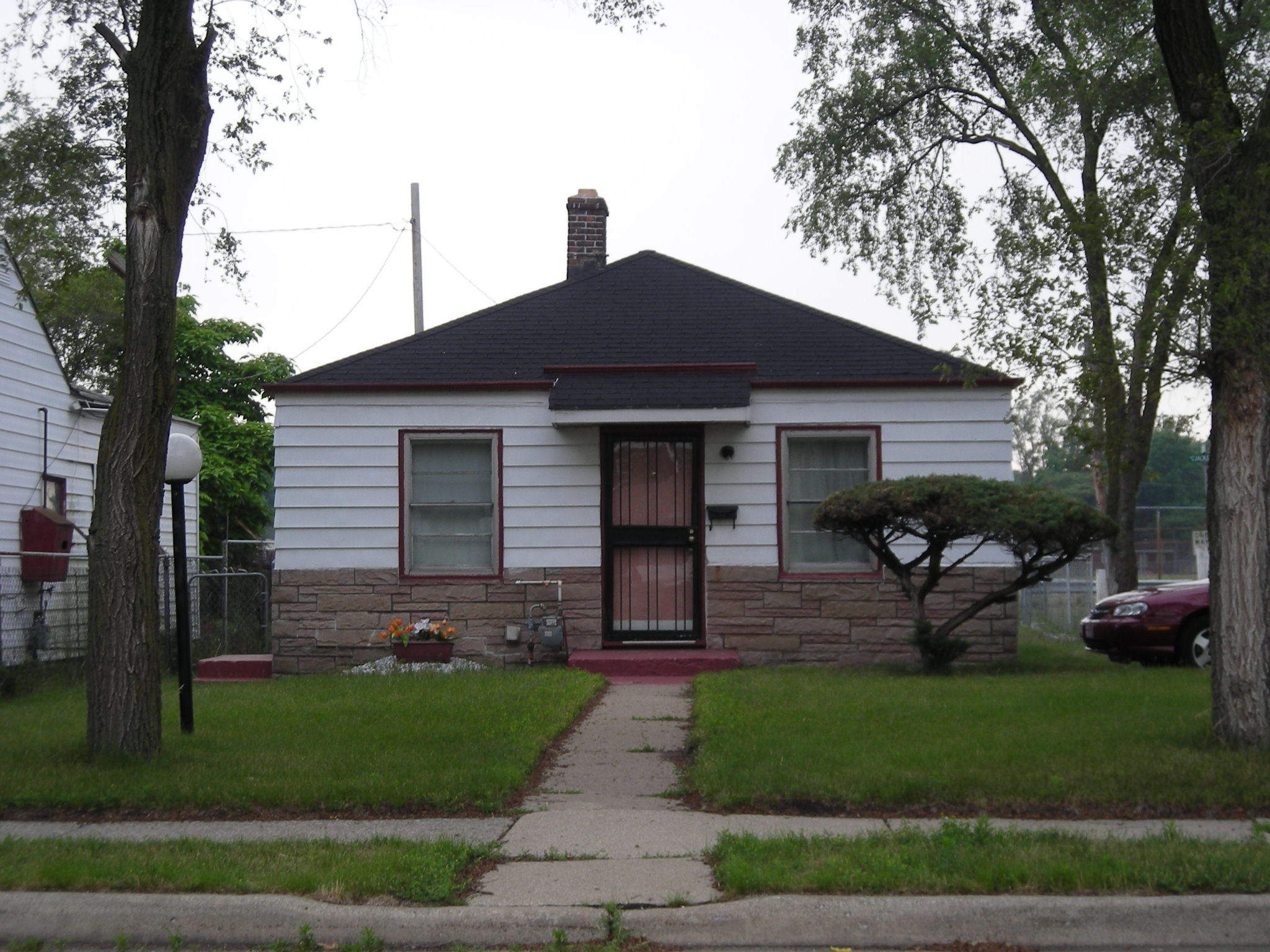
Gary's mayor has big hopes for Michael Jackson boyhood home

Jackson's modest home to become like "Graceland":
The mayor is calling Jackson's modest boyhood home the new Graceland, and others hope to use Jackson's name to raise funds for a museum.
But Jackson and his family, like so many others, left the northwest Indiana city behind a long time ago.
...
But Clay shook his head when asked if Neverland might be a better location for die hard fans to connect to the singer's legacy.
"No. No. No," Clay said. "If you're going to build a museum to Michael Jackson you should build it where the true love for him is."
The Jacksons moved from Gary after the Jackson 5 recorded their first album in 1969.
By that time, the steel industry, in which Jackson's father had worked, had started to decline. Over the following decades, the city's unemployment and poverty soared, crime increased and the population dwindled.
Nearly 200,000 people lived in Gary in the 1960s. By 2007, that dropped to 96,000 and one-third of residents lived below the poverty line, according to recent U.S. Census data.
Clay said he hopes Jackson's death will help energize officials to push for building a memorial, which could include arts center and museum, to the singer in his childhood hometown. Proposals also include moving the Jackson home near an interstate that serves as a main route for commuters heading to and from Chicago, Clay said.
I compiled some video links from my local CBS affiliate over at my other blog, The Sixth Ward. As for Gary, trying to get tourists to come is a great idea, but I think Gary needs more than strong love for a favorite son!

Pic of the Jackson family home is from Flickr!

Friday, July 18, 2008

The end of the Jackson Park L east of Cottage Grove

I found this video that showed the demolition of this L line we would today call the East 63rd Green Line. That part of town could have had that L line as a sort of asset but it was determined to be a part of the blight on that part of town and there was success in tearing it down.

Imagine this, once upon a time this line went into Jackson Park right past Stony Island. Don't believe me? Check out this page from Chicago-L.org.

This decision seems to have been controversial and I would like to point you in the direction of this article...
In a controversial decision that brought an angry reaction from community activists in the audience, the Chicago Transit Authority Board voted Wednesday to back a plan to tear down a three-quarter-mile section of the Green Line.

The board followed the lead of the city, which contends that demolition of the CTA's elevated structure between Cottage Grove and Dorchester Avenues is critical for residential redevelopment along 63rd Street in the economically depressed Woodlawn neighborhood.

The long-running battle over the rail segment now shifts to Washington, where federal officials have been asked by the city to provide funds for demolition and forgo repayment of grants used to make improvements on the line.

The debate over whether to retain or tear down the Cottage-to-Dorchester segment has stretched over the last two decades, said Joseph Boyle Jr., the city's commissioner of planning and development.

Disagreement on what to do has "prolonged the discussion and delayed the decision," and there has been little development along 63rd as a result, Boyle told the board. Taking down the elevated structure "will allow 63rd Street to become a focal point for community activity rather than a barrier," he asserted.

Demolition opponents charged that the tear-down plan is designed to permit continued purchase of city-owned parcels along 63rd by the Apostolic Church of God and its pastor, Bishop Arthur Brazier, a veteran Woodlawn community leader. But Boyle said the city's only interest is in neighborhood regeneration.

Citing the results of a March 12 hearing and other public comment, city officials have told the Federal Transit Administration that 56 percent of area residents favor demolition.

Activists who oppose razing the structure charged Wednesday that the numbers were "ginned," and they slammed the CTA's decision to support the city's position.

"I think it was an act of cannibalism," declared Jackie Leavy, project coordinator of the Neighborhood Capital Budget Group, a community-redevelopment umbrella group. "They are eating up their own rapid-transit infrastructure.

"In 10 years, when the Woodlawn community repopulates, those householders are going to be asking why they don't have clean, quiet rapid-transit service," Leavy said. "Clearly the facts show that redevelopment has been going at an increasing pace for several years."
The deed was done and if you go over to Hyde Park Progress and look at this post, people are still talking about this if you look in the comments. Here's an example:
This facility, however, was never opened and was actually torn down due to political pressure brought to bear on the CTA® by certain residents of Woodlawn and Reverend Arthur Brazier, who believed the structure over East 63rd Street would further blight Woodlawn and prevent redevelopment.

That is one of the more bizarre chapters of CTA history, right there. And, I must say, one of the more prominent cases of human folly in recent history.

Brought to you by the same guy who developed the 47th Street Co-Op location.

A mindset straight out of the early 60s -- Urban Renewal written all over it. Old timers with old ideas -- a problem in every neighborhood.
In a time where we want to get cars off the road for the sake of the environment and to ease congestion I hope that we never buy into this idea that we don't need an L or some form of rapid transit. Or indeed that an L contributes to blight when it could have just as easily been spruced up and been in regular service.

If Woodlawn is ever going to become the next hot neighborhood, especially if the University of Chicago is moving further south, I wonder if CTA could just simply do a re-extension? Perhaps there can be L service to the Museum of Science and Industry.

Sunday, March 02, 2008

New Latino Wave Helps Revitalize Detroit

I didn't get to this earlier but The State of had a post about Latinos revitalizing Detroit. As most of us know Detroit is a struggling city. Then it was stated at the end of the post...
TheStateOf . . . Detroit. Oh, I (J) can't wait to hear the hanky-head lazy negroes complain about how the "Mexicans are taking all the jobs" like brothas do out here in L.A. Latinos have taken over most of black Los Angeles because they open small businesses, which, in turn, establishes roots in the community. Drive around black L.A. and there is nothing but big corporate stores, franchises and liquor stores (owned by Koreans).
So do you think someone is going to complain instead of just doing their own startup? That's I how I took that quote. It almost reminds me about the story about food deserts in predominantly minority/poor areas of Chicago. Why complain or conduct studies find some capital and build a grocery store!

Obviously Detroit needs more than a grocery store amongst other things. I won't pretend I know what that is, but the main thing is to start finding ways of driving that economy. Make Detroit the vibrant city it once was.