Showing posts with label black history month. Show all posts

Wednesday, February 28, 2018

Black History Month

I'm sorry that I hadn't done more this year with regards to Black History Month. Allow me to remind you that history is made everyday, especially Black history. As I'm learning no accomplishment is too small, that said Black history doesn't stop in a month of only 28 or 29 days.

Not only strive to make history everday of a year, also strive to learn more Black history every day of the year. There's always a book to read on this subject. Better yet there's always a movie to watch on Black history, and besides movies are more my speed anyway.

Regardless, February may only be Black history month just remember that it's all year long. This is for every aspect of history, especially American history or world history!

Friday, February 23, 2018

Black populism

I briefly did a post on this a few years ago. While I hardly wrote much about that subject back then it was interesting that there was a populist movement of sorts among the former slaves of the south that predated the later civil rights movement in the next century. I briefly touched upon that over at E.M.

If you look at some of the bullet points shown in that old post from long ago many of what was advocated for aren't much different than they are today. There is still a need for Blacks to serve on juries - as unpleasant as that can be. We certainly need to raise money for school though these days the focus - for good or bad - is on the public schools.

I see some ideas with regards to economics in those bullet points though back in the 19th century most Black still lived in rural areas today many Blacks live in urban or suburban areas. So perhaps we need a Black populism in our urban areas. Don't have to go much further than see some of the neighborhoods of Chicago's south and west side. Just think that in the new year the latest controversy by a politico in Illinois was over discussion of "strategic gentrification". The violent crime, closing schools, foreclosures, etc are causing a certain segment of Chicago's population to leave and open the door to people of greater means to come in and make these areas what they will.

Perhaps the closest we got to a modern Black populism was the 1960s. The failed Seaway National Bank an emphasis on empowering economically Black communities especially when it comes to financial services since the major banks of the 1960s just Black people as a risk. It wasn't just about welfare or gov't programs & legislation it was about self-empowerment.

Perhaps this is the populism Blacks need today. I understand the need for Black Lives Matter, even if some aspects of their activism raises my eyebrows - case in point below [VIDEO]
So where are our Black business people? Who's got the bright ideas that would build up struggling Black communities? Where's the Black version of Donald Trump? Where are our populists?

Believe it or not we're living in populist times. Bernie Sanders as you saw above being confronted by Black Lives Matter activists in Seattle during 2016 is one sign of them. And also on the other end of the political spectrum we have Donald Trump who was elected President that year. Obviously voters who cast a ballot for Trump clearly rejected the establishment and the President as he still does on occasion speaks directly to the people. That is the essence of populism the people themselves may not have an ideology, but certainly the people want what they want.

Perhaps with the movie Black Panther having a successful opening weekend one thing to note is that the fiction Wakanda can be the model of what we hope Black communities anywhere can be. This is the Black populism I propose which is about economic empowerment. We can support a comic book movie that has a Black director and writer, we can certainly use that to build up our communities and turn them into economic powerhouses.

Friday, February 09, 2018

Black history month in space...

Earlier this week Elon Musk of Space X accomplished the launch of his Tesla roadster into space on course for the asteroid belt beyond Mars. His Falcon Heavy rockets has the promise of lowering the cost of space launches because they are reusable, they also are said to be capable of sending space craft to the moon or Mars. Also think the launch that sent Musk's car into space is expected to be in near Mars orbit in 6 months. That rocket is very powerful.

Well I don't just want to talk about that. It's Black history month. Let's talk about Black astronauts.

To start the very first Black astronaut was a US Air Force test pilot named Robert Lawrence. Sadly he died over 50 years ago in a plane crash. While not officially part of NASA, he was part of a classified Air Force space program designed to spy on the old Soviet Union. It was said in that military.com article I linked to that he'd have flown in the space shuttle program had he not died in 1967.

Regardless Lawrence paved the way for Guion Bluford - who's name was mispelled by military.com. Bluford was the first Black to fly in space aboard the space shuttle. He first flew aboard space shuttle Challenger in 1983 and flew three more NASA missions until he retired from the space program in 1993.

After him was Chicago's own Mae Jemison who was the first Black woman in space flown aboard space shuttle Endeavor in 1992. She was a noted Star Trek fan having used Nichelle Nichols' Lt. Uhura as her inspiration for becoming an astronaut and thus was about to parlay this into an appearance on Star Trek: The Next Generation as a transporter chief named Palmer. Jemison left the space program in 1993.

Finally, Charles Bolden was the first Black not only to command space shuttle missions the first aboard space shuttle Atlantis in 1992 also space shuttle Discovery in 1994. He also was appointed by Barack Obama as the administrator of NASA a role he served until just days before the inauguration of President Obama's successor in the White House Donald Trump. Bolden also flew on four shuttle missions in addition to the two he commanded.

Of course another point in Black history would've been the first Black on the International Space Station, alas she had been pulled last month from her historic flight. Jeanette Epps would've flown to the International Space Station in June however according to this Washington Post article she was pulled in favor of Serena Auñón-Chancellor who would become the first hispanic woman to live on a space station upon her flight in June

Including the previous three names of those Blacks who have flown shuttle missions fourteen Black Americans have flown into space so far. And for those of you dreaming about taking that trip to the moon or Mars you still have time to make Black history once those future spaceflights become reality. I would like to write about you when you do!

Friday, February 02, 2018

Black History Month - Montgomery Bus Boycott

It's February and you know what time it is...Black history month!

During the 1990s there was an HBO film with regards to one of the first major acts by a young Dr. Martin Luther King called Boycott. This movie portrayed the Montgomery Bus Boycott and it starred Jeffrey Wright as Dr. King who was pastor at Dexter Avenue Baptist Church.

I was reminded today (thanks to a passing mention by Mancow Muller on the radio) that while we remember Rosa Parks for her act of refusing to give up her seat on a local Montgomery, Alabama bus and getting booked for it. There was another young woman at that time who was already gearing up for this named Claudette Colvin. Unfortunately most of us might know who that woman is.

So aside from a wikipedia entry here's a 2009 NPR article about Ms. Colvin who was 15 when she began her own youthful protests against segregation. She didn't want to give up her seat on a bus to a white person. I can see this as her youth, but she wasn't wrong to do her protests. And on top of that her name was added to a court case regarding the bus segregation of Montgomery Browder vs. Gayle.

And according to NPR there are reasons we're not that familiar with Ms. Colvin's contributions:
There are many reasons why Claudette Colvin has been pretty much forgotten. She hardly ever told her story when she moved to New York City. In her new community, hardly anyone was talking about integration; instead, most people were talking about black enterprises, black power and Malcolm X.

When asked why she is little known and why everyone thinks only of Rosa Parks, Colvin says the NAACP and all the other black organizations felt Parks would be a good icon because "she was an adult. They didn't think teenagers would be reliable."

She also says Parks had the right hair and the right look.

"Her skin texture was the kind that people associate with the middle class," says Colvin. "She fit that profile."
Ah, a teenaged girl who didn't have the right skin color or hair texture wouldn't fit the right image. They were looking for the right optics to make this movement more relatable to the right people.

I recall seeing this in a book regarding the Civil Rights movement, perhaps a mention of a teenaged girl being pregnant. Don't recall a name and a long way from tell you what book it was. Perhaps that'll be the subject of another post sometime this month. Allow me to find that book.


Monday, February 09, 2015

Black History Month 2015

Posted recently at the Shedd School blog that same post had been published here. It still are my thoughts on Black history and how to truly observe it. Although yes I did share the ways I would prefer to teach some aspects of Black history.

Hopefully this is advice considered not by adults, but also children as well. Everyone should know their history whatever that might be -  i.e. American, Black, European, etc.

Monday, February 02, 2015

What if I taught Black history???

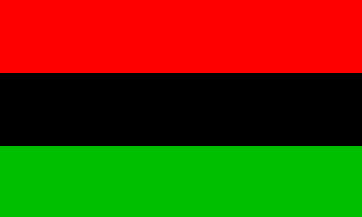
Black nationalist flag
Recently I found this article out of Washington, DC, some teachers from a public school had been fired by their principal. The alleged reason was teaching Black history in the context of social science. Allegedly the principal disapproved of teaching Kwanzaa and the late DC Mayor Marion Barry.

I could just talk about this article then I thought about it. What if I - Levois - taught Black history. This is what we will discuss  at the start of Black History Month.

Last year, I wrote about my thoughts on this yearly tradition which will be reposted at my "Shedd School" blog. Some TV stations around the nations will show a young person - who likely is anywhere from a grammar school to high school student - reciting some quick fact about Black history that could be used as a soundbite during commercial breaks. My thought was that Black history is more than this quick 15, 30 second, or one minute soundbite.

My way of teaching the subject of Black history would involve critical thinking. It's something that I've only gotten better with at least by the time I was done at Morehouse. It wasn't entirely something that was ingrained in me in my time as a public school student.

As a sophomore in high school - GO FALCONS - I had taken Black history. For the first time I had been introduced to the Black pledge of allegiance and Kwanzaa. I as a public school student was already aware of this poem which has been referred to as the "Black National Anthem". We sometimes sung it after we sung either "My Country Tis of Thee" or "The Star Spangled Banner".

We had been taught about the idea of conditioning - that is slaves had been conditioned to believe that they were born to be slaves. We had been taught that a Black poet Phyllis Wheatley had been conditioned and we know this through her poetry. We also had substitutes who made it know they were "pro-Black".

We had also been taught about Willie Lynch. Lynch reportedly wrote a letter that spoke of conditioning slaves. Although the authenticity of this letter have been called into question, we still talk about the letter. Even stating that Lynch's prescribed conditioning still have long lasting effects.

Then over the years I started to believe a lot of this is a form of propaganda. That's not to say we should never have learned of this at all. But there is a way of presenting this without making it seems like a fact.

Phyllis Wheatley, Willie Lynch, and others is a way of using Black history to teach critical thinking. I would prefer students learning Black history whether they be Black or whatever to decide for themselves if some subjects regarding Black history is valid or not. Is conditioning of slaves a real concept, for example. This is how I would like to have been able to lead a classroom.

Who knows perhaps one day I made decide to teach and may touch bases with Black history. At that hopefully I would be teaching this with older students who are at least between 12 to 18 who might take well to critical thinking.

In the meanwhile I can only ponder how I could conduct my own lessons in Black history.

Monday, January 20, 2014

It's MLK Day and Black History Month is coming up!

You know what good day to discuss this subject on MLK day. It hits me that Black History Month (BHM) is just around the corner.

When I first started this blog I had been determined to do some Black history posts and at times I've come very short. My goal wasn't just to pull out moments from Black history surely everyone remembers from school, but just to talk about where Black America is going in my view. Perhaps another goal was to say, where should we go.

Last year, I didn't do a very good job of noting BHM until the end of the last month. The point was history is always being made every day and that's important to note.

At the same time I feel as if there is a neglect of Black History and issues on my part, even if it isn't during the month of February. It caused me to come to a new conclusion recently. Perhaps I should start reading more.

I still have a booklist in the sidebar of this blog. There's really no point to this list only to say that these are books of interest and not for myself, but for you if you're interested. These books are across many different interests especially politics, philosophy, or even racial interest.

So there are some books on this list that I actually do have in my collection that would be of great interest and it's time to start reading them. Besides years ago I started the Booker T. Washington autobiography - Up from Slavery - and never finished. It's time to finish.

The face associated with this blog so far is former anti-slavery advocate Frederick Douglass. His autobiography - Narrative of the Life of Frederick Douglass: An American Slave - was something that was read in school, but if there was a reading test about the book there was no way to pass back then. Now that there's no pressure of class now is the time to start reading.

I have also been keen because it have recently become of interest to read the late Nelson Mandela's book - Long Walk to Freedom. It was once written that I often cringed at the idea of comparing the segregation here to the apartheid of South Africa there was little difference. It's great to learn his experiences as an activist in that nation to truly change that country and he served in prison for his activism from 1964 to 1990. It's time to start reading.

Well no need to stop there, but it's certainly going to be the start. And perhaps there are other books to be bought in the near future on various subjects that it's time to read. What better time to start reading than Black History Month!

ALSO, the earlier links to Up from Slavery and the Narrative of the Life of Frederick Douglass are to public domain copies of the book. Feel free to click on them and read! 

Thursday, February 28, 2013

I let the whole month of February go by

I didn't seem to pay a lot of attention to Black History Month this year. Not sure why exactly, but hey it seems there's been a lot going on this month.

Let me just stress first and foremost that history is made everyday by anyone who does something of great significance. Or we make history by living in significant times although all time is significant.

We could talk about the accomplishments of many Blacks in this nation or the world. We could talk about activits, explorers, inventors, engineers, architects, entrepreneurs, artists, writers, performers and I could go on and on. While it's important to talk about those who have made the history books we should encourage the future just as well.

Someone out there who isn't the history books yet will be there in the future. Indeed we should focus on the young people as well as they go through school. It's in our best interest to insure that they will succeed in the future and indeed some of them may also find themselves in the history books. May their accomplishments be both positive and very significant.

And of course may we continue to make history ourselves!

Tuesday, February 28, 2012

Late Black history month entry!


Chicago History blogger John Schmidt writes about entrepreneur Jesse Binga who succeeded in Chicago early in the last century. Alas he couldn't keep his success as the stock market turned and his investments went south. In addition to that he was sent to prison for embezzlement. Schmidt's anectdote is worth sharing.

BTW, I really regret not doing more with Black History Month this year. It's usually my thing and surely there are many stores to tell during the month of February!

Wednesday, February 09, 2011

First black to graduate medical school did so in Chicago in 1847

First black to graduate medical school did so in Chicago in 1847 - Chicago Sun-Times

Editor’s note: This is one in a series of Black History Month highlights of prominent African Americans and important events.

In 1847, abolitionist Dr. David Jones Peck became the first African American to receive a degree from a U.S. medical school — earning it here at Rush Medical College.

Peck was born a free man in Pittsburgh around 1826, the son of abolitionist minister John Peck. 

When he was about 20, Peck was taught medicine by Dr. Joseph P. Gazzam, a white physician.

In 1846, he enrolled in what is now Rush-Presbyterian-St. Luke’s Medical Center and graduated with a medical degree a year later. After graduating, Peck traveled to Ohio with such prominent abolitionists as William Lloyd Garrison and Frederick Douglass in support of the anti-slavery movement.

At the urging of friend and African-American physician Dr. Martin R. Delany, who promoted the idea of free blacks settling in Central America, Peck traveled to Nicaragua. He remained there until 1855, but accounts of his life after that date conflict. How and when Peck died is unknown. 

In 1984, Rush created a memorial in honor of his achievements.

Mariann Devlin

Sources: Metro Chicago Almanac, University of Pittsburgh
A curious story. What happened to Dr. Peck, I wonder?

Monday, February 07, 2011

Robert Abbott founded Chicago Defender in 1905 - Chicago Sun-Times

Robert Abbott founded Chicago Defender in 1905 - Chicago Sun-Times

This individual founded a Black newspaper, The Chicago Defender:
Despite receiving a law degree from the Kent College of Law in 1898, Robert S. Abbott (1870-1940) could not practice his profession because of racial barriers, but he could still defend people. The son of former slaves founded the Chicago Defender newspaper in 1905. His paper famously waged war against racial prejudice and injustice. Listing jobs and even train schedules, the Defender became a primary figure in the Great Migration of blacks to the northern states. With an initial investment of 25 cents, Abbott became one of the first African-American self-made millionaires.

The Defender was carried by Pullman porters throughout the South. Its paid circulation reached 130,000 by 1919.

Abbott co-founded the Bud Billiken Club with Defender managing editor Lucius Harper. He also launched and led the annual parade. On Feb. 29, 1940, Abbott died as a result of Bright’s disease.

Matt Wilhalme

Sources: Chicago Sun-Times, Metro Chicago Almanac, the Electronic Encyclopedia of Chicago, PBS.org and ChicagoDefender.com

Saturday, February 05, 2011

Oscar DePriest became Chicago’s first black alderman in 1915

Oscar DePriest became Chicago’s first black alderman in 1915 - Chicago Sun-Times

Another little tidbit worth noting from the Sun-Times:
Oscar DePriest (1871-1951) arrived in Chicago in 1889, a son of former slaves. He was a painter and decorator. He would become the first black alderman in Chicago.

After beginning a career in real estate and holding several other public offices, DePriest was elected alderman for the Second Ward in 1915, 26 years after his arrival.

Breaking the color barrier in the Chicago City Council wasn’t his only achievement. In 1928, running as a Republican, he also became the first African American elected from a Northern state to serve in the U.S. House of Representatives.

As a congressman, DePriest championed anti-discrimination bills, many of which failed to pass, but he was successful in getting a measure passed that banned discrimination in the Civil Conservation Corps in 1933. DePriest was succeed in Congress by another African American in 1934, Democrat William L. Dawson (1886-1970).

DePriest died in Chicago on May 12, 1951.

Sources: Chicago Sun-Times Metro Chicago Almanac, The Electronic
Here's another page of interest from the US House of Representatives, Office of the Clerk of Congressman DePriest.

Friday, February 04, 2011

Who is the 'Father of Black History'?

 Who is the 'Father of Black History'? - Chicago Sun-Times

In all this stuff about snow I wanted to note that it's Black history month already. So the only thing going on isn't merely the city elections here in Chicago:
Dr. Carter G. Woodson (1875-1950) is known as the “Father of Black History.” The native of Virginia struggled for an education, but became a high school teacher and later a professor at Howard University. He earned a degree from the University of Chicago in 1907 and a doctorate from Harvard in 1912.

In 1915, he convened a conference in Chicago that led to the creation of the Association for the Study of Negro Life and History.

He founded the Journal of Negro History. In 1926, he worked to establish a Negro History in February, to coincide with the birthdays of Abraham Lincoln and Frederick Douglass.

Sources: Metro Chicago Almanac and Dr. Carter G. Woodson African American Museum
Since I have allowed myself to get fixated on this article and the snow, think it's time to find what else the Sun-Times have to offer on this subject.

Sunday, June 20, 2010

Happy Juneteenth

I really wanted to do a post about this yesterday, but I didn't even think about it until I saw this post at Instapundit. Really that post is merely a link to a Wiki article about Juneteenth.

This holiday is normally celebrated on June 19th and its significance is that in the state of Texas on that date in 1865 the Emancipation Proclamation was read to slaves there. Texas according to Wikipedia had largely resisted this document which was already in force since January 1, 1863.

Essentially this is a celebration regarding the ending of Slavery in the United States. It is however largely celebrated by blacks. For the most part however I know nothing about it or it's significance.

As a matter of fact many years ago there was a festival in my neighborhood park. There were like a little carnival in addition to some BBQ or what not. It was a lot of activity and that was a long time ago. So far there have been know no observances that I know about in Chicago.

It's an obscure observance perhaps we should celebrate the end of slavery or Black culture. At that who says we need to only observe that during Black History Month. And of course on this day we can celebrate other aspects of the Black experience in this nation.

Perhaps next year we can have more to say about Juneteenth than it was a post on another blog that is merely a link to a wiki article. ;)

Sunday, February 28, 2010

Woes of governor, Rangel mark end of Harlem 4 era

We close out Black History Month with a political history story from Harlem, NYC.

You know I didn't mark Black History Month this time, but then it seems I don't do enough Black History stuff during the month. But there are always things worth nothing not just during February. Let's not forget that everyday we can look at Black History. Why wait until February?

Anyway this article from the AP posted at the blog Black Politics on the Web, takes a look at influential politicians that reside in that famed New York City neighborhood:
They ran the city, represented Malcolm X and were black pioneers who put Harlem on the political map. The “Gang of Four” were kingmakers who built Harlem’s political dynasty into an empire. But with high-profile body blows this week to one member and the son of another, the group’s legacy is in disarray.

It seems unlikely that Gov. David Paterson could have become the state’s first black governor without the groundwork laid by the group - and the connections that came with being the son of Basil Paterson, one of the quartet along with Rep. Charles Rangel, political power broker Percy Sutton and former New York City Mayor David Dinkins.

But with the younger Paterson ending his election bid following a scandal over an abuse complaint against his aide, Rangel facing accusations of breaking House rules, the death of Sutton in December and the aging Dinkins fading from public view, the power base that made Harlem a launching pad for the state’s black leadership seems to be dissipating.

“In a sense, their day has passed,” Baruch College politics professor Doug Muzzio said of the elite group who led Harlem’s political heyday. “It has not gone on to a second generation. … You will no longer have such geographically and personally concentrated influence within the black community.”

Sutton was a civil rights trailblazer who represented Malcolm X and a media mogul who served in the New York State Assembly and as Manhattan borough president. Dinkins became the city’s first black mayor.
And their influence may not likely be replicated anytime soon. Black leadership in our nations largest city, in population, are coming from other city neighborhoods.

Another aspect of this article is discussing who amongst the younger generation may emerge to positions of political influence. Also who says Charles Rangel, whether or not he doesn't have his ethics challenges as portrayed in this article, should be replaced by a more youthful voice in Congress. Surely one day someone else will emerge as an influence.

We shall see!

Monday, February 22, 2010

Todd Stroger's mentor...

Was his father according to this Sun-Times article.

John Stroger was the first Black to sit in the seat of the county board Presidency. After Bobbie Steel became acting county board President, she was succeeded by John's son Todd. Unfortunately early this month Todd Stroger was defeated in his bid to be nominated to run for a second term as county board President. It looks like for now any potential dynasty is not going to continue.
"Black History Month means a lot to me," said Stroger, whose legendary father, the grandson of former slaves, rose from humble beginnings in rural Arkansas -- growing up in a three-room shack without electricity or indoor plumbing -- to the peak of political power.

The elder Stroger put himself through college, worked for a while in the civil rights movement, then moved to Chicago and into Democratic Machine politics. He rose through the ranks, earned a law degree, and in 1970 won a Cook County Board commissioner's seat. It started a 24-year climb to his historic 1994 election as board chief.

"It was Bill Dawson begat Ralph Metcalfe, begat John Stroger, begat me," said his son, referring to his father's political mentors.

His father was drawn into politics after Dawson -- the third African American elected to Congress in the 20th century -- visited Little Rock, Ark., to urge blacks to help elect President Harry S Truman. When he moved to Chicago in 1953, he joined the 3rd Ward organization run by Metcalfe, who would later win Dawson's congressional seat.

"So we all learned from someone who was a great figure. In life, we need that mentor, somebody who will give you the skills you need to do certain things. But it's not just politics," Stroger said. "My dad taught me an awful lot. When I was young, he'd always say, 'You have to work twice as hard as everybody else, and even your friends are the people that you compete against.'

"He was a perfect mentor. He taught me perseverance. He didn't just fall out and all of a sudden he was the County Board president. He had to do a lot of things before he got there. He was really literally kind of turned away at the door when it was his chance, until he saw the opportunity and said, 'Well I'm not going to wait for them. I'm going to go through the door.' So I saw that in him, and learned from it."
I said in another posting that I think with Todd greatness might have skipped a generation. Harsh words you think?

I understand there those who believe that Todd should remain in there because the fiscal picture of county government wasn't in that bad of shape as is the city, state or even federal government. It's a significant accomplishment I suppose, but Todd may well have not been meant for politics at all.

Perhaps that sales tax hike didn't help him politically. It might have been good for the fiscal health of the county at least for a brief time. Of course when it passed you might have heard people groaning and talking about going outside of the county to do their shopping.

Perhaps he was how he got into his position. A week before the 2006 primary election John Stroger fell with a stroke. He was largely out of the public eye since that time and passed away in 2008. There was a scramble to figure out who may succeed John Stroger as the Democratic nominee for the county board presidency. Then suddenly Todd Stroger emerged as the eventually nominee and at that it was him over more experienced pols to take the job.

In 2006, Todd was only an Alderman on the city council. We rarely heard a peep out of him then. We hear more about him now since he was elected to lead one of the most populous counties in the nation! Before he was an Alderman he served as a State Representative in Springfield and hear barely a peep out of him there as well. In my mind he was only a backbencher with a record that doesn't indicate that he could handle the job of running a major county like Cook.

I don't know if I've ever said this, but I've only been a recent follow of what's going on at the County. I wish I could tell you my feel for John Stroger. All that can be said was that he was an old school politico and he may have more going for him than Todd had as a politician. Hence why I may say that for Todd greatness may well have skipped a generation.

All the same this reads more like a father's day piece than a Black History Month piece. And for that it's a plus for Todd!

Friday, February 19, 2010

Wings for this Man


Just saw an episode of Dogfights about the story and tactics of the Tuskegee Airmen. Those gentleman were part of an experiment that proved that Black Americans could not only be pilots, but able fighter pilots.

You know I really would like to figure how how the military establishment decided that blacks couldn't be able soldiers and should be relegated to servant positions in the military. There have been many examples where a Black have served ably in combat positions. Blacks have served in the American Revolution, Civil War, Indian Wars, Spanish-American War, and the two World Wars. At that most served in segregated units!

The Tuskegee Airmen were another front in the battle for equality amongst blacks in America. Not too long after the war the US military was desegregated. And while America isn't all the way there as far as racial equality perhaps our forebears should have our thanks for making America what it is today!

The video, Wings for This Man, above is narrated by future President Ronald Reagan. It's about the Tuskegee Airmen, but according to the information provided from Wikipedia this vid was considered propaganda. Doesn't matter it documents the efforts of these military pilots and their contributions to the 2nd World War. Even if their efforts weren't appreciated.

Tuesday, February 10, 2009

Former Klansmen apologizes to Rep. John Lewis

I twittered this CNN video on Sunday, but I think this story deserves it's own post.

And we can look at this write-up from the Tribune's blog, Exploring Race:
Elwin Wilson’s story is one of transformation. That’s why it resonates so much. It’s a story of changing one’s self and in a way that’s neither instantaneous nor painless---but it reminds us that change is possible.

By now you’ve probably heard about the meeting that Wilson, a former member of the KKK who lives in Rock Hill, S.C., had earlier this week with U.S. Rep. John Lewis (D-Ga.). It began this way: Last month, Wilson, 72, read a story in his town’s newspaper about a group of students from the local black college who decades ago had faced an angry white mob. They were trying to integrate a dime store lunch counter.

Wilson was part of that angry mob and another that attacked the congressman, leaving him bloodied.

So, after years of wanting to make amends, Wilson apologized to the former students. (He’s shown in a grainy photograph reveling in having cracked an egg over the head of a young black man.) Then, this week, Wilson traveled to Washington D.C. to apologize to Lewis for beating him up at a Rock Hill bus depot. Lewis got off the bus in May, 1961, determined to enter a “white only” waiting room. That was when Wilson grabbed Lewis.
I'm not sure I'd ever see this day. A former Klansmen who seeks to reconcile with one of the very people he hoped to defeat especially by physically beating him. Is it easy for us to just think of Wilson as a Klansmen forever?

In the CNN video you might hear about Wilson getting a phone call from a guy who certainly considers him a turncoat against the Klan, even if he left that mindset behind years ago. It wouldn't surprise me if the person who called him is a young racist hot head himself. In a few years, assuming that he might have done something that borders on what Wilson did way back when, this young man might seek forgiveness in his old age.

Friday, February 06, 2009

Statue commemorating race riot to be unveiled

The race riots that happened over 100 years ago in Springfield, IL are getting more and more recognition these days. Check out this AP article:
During its quarterly meeting Saturday in Springfield, the Illinois State NAACP plans to unveil a bronze statue by sculptor Preston Jackson commemorating the Springfield Race Riot of 1908.

This is the centennial year of the NAACP, and former Springfield chapter president Ken Page says the riot was one of the reasons the civil rights organization was founded.
This sculpture was commissioned thru a grant of $300,000 by the IL Capital Development Board to the city of Springfield. Also the Springfield NAACP branch and the Illinois Historic Preservation Agency were instrumental in this project.

Not bad for an historical event that has only recently started to garner some attention.

If you want to know more I refer you to one of my posts that links to some relevant information.

100 years had past last year, but this year I'm sure we'll hear a little bit about the race riots that occured in Chicago back in 1919. 2009 is at least the 90th anniversary of that. I would like to find some links about that race riot. People know a little more about that than they did about what happened in Springfield, IL in 1908.

Wednesday, February 04, 2009

Cuff Links...A Brief American History

I suppose this is commentary on race relations in this nation. From slave shackles to Presidential cuff links. And just in time for Black History Month.

If anyone has any idea where this cartoon first appeared I would greatly appreciate that information.