In May I posted the trailer and a brief note: as always, I would withhold judgment until I actually saw it. I later watched the episode on DailyWire.com. I’m glad the full thing is finally on YouTube.
Matt Walsh’s Real History episode is the kind of thing this blog has always been for: a video that refuses the schoolbook version of a sacred American story. The title is The Real History of the Civil Rights Movement, Part 1: “A New Constitution.” His pitch is straightforward. Since the 1990s, classrooms have turned Martin Luther King Jr. and Rosa Parks into saints.
Almost everything in that telling, he says, is incomplete or wrong. Who funded the movement? How non-violent was it? How racist was 1950s America, really? Did the 1964 Civil Rights Act help Black Americans, or did it rewrite the Constitution in ways we still live with?
Those are fair questions. Some of the answers are fair. Others are stretched, selective, or wrong. History is not a morality play.
In a recent PBD Podcast, Patrick Bet-David spoke with Andre Williams about “Black fatigue,” the Karmelo Anthony case, and tough truths facing Black America. Williams pulls no punches — and openly discusses the backlash he faces for saying these things.
I value conversations that cut through simplified narratives despite the cost.
Rosa Parks vs. Claudette Colvin: The Orchestrated Choice
Williams argues the Rosa Parks incident was orchestrated by the NAACP. They picked her as the symbol because she presented a more “respectable” image — lighter-skinned, from a respected family. He contrasts this with Claudette Colvin, the 15-year-old who refused her seat nine months earlier. Colvin was dark-skinned and working-class, and later became pregnant by an older married man (an encounter she described as statutory rape).
Williams points out the feared backlash: in the 1950s climate, Colvin’s status as an unwed teenage mother (from what she later called statutory rape) could have been twisted by opponents to smear the movement and distract from segregation itself. Leaders chose the “safer” symbol in Rosa Parks to avoid that risk.
This ties into his broader point about shaped narratives that can downplay internal community challenges.
Personal note: Learning about Claudette Colvin years ago was eye-opening — all I really knew back then was that a pregnant teen had done essentially what Rosa Parks did later. I had no idea at the time how strategically Parks was chosen or that the iconic imagery around her was more of a photo-op. It puts Williams’ point in even sharper perspective.
CONTENT WARNING: This post discusses the 1955 murder of 14-year-old Emmett Till, including details of violence, alleged sexual assault, and related historical claims. Reader discretion is advised.
Matt Walsh recently released a short from The Matt Walsh Show that challenges the standard narrative around the 1955 killing of Emmett Till. This case has been treated as sacred history in American education and media for decades. Walsh argues that key details have been sanitized or altered over time for propaganda purposes.
The familiar story taught in schools goes like this: A 14-year-old Black boy from Chicago visits relatives in Money, Mississippi. He whistles at a white woman in a grocery store. She tells her husband a more serious version of events. The husband and his half-brother then abduct, torture, and murder the boy. The case becomes a catalyst for the Civil Rights Movement. Later, the woman (Carolyn Bryant Donham) supposedly recants and admits she lied about the encounter.
Walsh examines the original testimony, court records, and other sources to present a different picture.
As always I will withhold judgement until seeing this. Matt Walsh is known for his rather sarcastic take on controversial issues such as trans-ideology, anti-racism, and of course often on the news of the day. I'm curious what direction he'll take on the Civil Rights movement.
Matt Walsh is someone I generally agree with on quite a few issues and I'm going to beg to differ with his profanity laced argument.
Barbara Rose Johns' statue will replace Confederate Gen. Robert E. Lee at the US Capitol thanks to her role during the Civil Rights Movement with regards to protesting poor conditions at her Virginia school. I think Walsh acknowledges this, however, is dismissive compared to the accomplishments of Gen. Lee.
Now I do believe this change is something that would've likely happened under Democratic control of the US Congress and certainly in the racially charged environment of 2020 - after the death of George Floyd. Now I learned in this article that Gen. Lee's statue was removed in 2020 - as I thought.
It seems the Republicans and the Trump administration are doing everything they can to undo any changes under the guise of wokeness. This could be a sign of wokeness.
Now for Gen. Lee, people will naturally stop at the fact that he fought on the side of the Confederacy in the Civil War. The story I might remember from my history class in school was that he was very unwilling to fight against his native state of Virginia once they had seceded from the Union.
He had formerly served in the United States Army and if I recall he lead U.S. forces against the rebellion of John Brown at Harper's Ferry.
What is the Confederacy known for, well generally they were the former slaves states of the United States of America - many of those states had left the Union. Well in today's society reflexively we believe the Confederate states are no different the the worst regimes of history. They're very racist they hate people who aren't white.
Now if you want my nuanced view - probably not all that nuanced - the Unions defeated the Confederacy. Slavery ended although America still had a race issue once the seceding states were folded back into this nation. We still had to deal with Jim Crow, segregation, etc. We may still be grappling with racial issues, however, we're a long way from where we were 60 or 70 years ago
I'm glad that Ms. Johns for her activism and who later married (actually she's Mrs. Powell and became a librarian who died of cancer in 1991 is getting her recognition now. Yes, it may not be as significant as Robert E. Lee and yet very significant in recent times.
With this said, I may agree with Walsh on one thing. If this is about being "woke" and leaving out that he believes she's unremarkable, then we can talk about how the left has no historical heroes.
The great historical heroes or the icons of history are problematic. Let's leave out that he mentions race - the white men of history. Perhaps some men who are historically significant are aggressive, eccentric, or perhaps hold problematic political views.
Whatever contributions to our nation, we need to recognize their accomplishments. We can recognize the bad, however, we also need to recognize their roles in our history.
Perhaps there was a much better way to recognize Barbara Rose Johns Powell than this woke posturing. For her being so young and being part of a Civil Rights action she should be recognized and known for her contributions.
In sharing this with you all, I wanted to remind you that an anniversary is coming up. George Floyd's death at the hands of Minneapolis Police five years ago. It touched off a very chaotic period in American cities and eventually moved around the world.
The civil unrest that took place around the country in the wake of Floyd's death happened during the pandemic as the world began to sort of open up after a time of mitigation efforts. My belief is that this wouldn't have been as problematic if people weren't largely isolated in their homes in an effort to mitigate the spread of the coronavirus.
Harmeet Dhillion is currently the head of the Civil Rights Division in the Trump administration. And she discusses why American cities had become very unsafe and she often cites these federal consent decrees. You can watch below and once you see her speak with Tucker Carlson I will have more thoughts. [VIDEO]
Dhillon notes the Ferguson effect, which is probably reference to what happened there with Michael Brown. The issue she discusses is how in some of these cities police officers are forced to write reports which keeps them from policing. And she notes how many officers instead choose to leave the police force for good or they may opt to go somewhere that allows them to actually police. She even note that the edicts often come down from the federal gov't and those who oversee these decrees may have very little experience with policing.
[VIDEO] A number of topics I saw when watching this interview.
Vince Everett Ellison discusses manhood, the need for fathers, and even the origins and benefactors of Civil Rights leader Dr. Martin Luther King. I didn't see the whole 2 hour + interview but it was very interesting.
Ellison had appeared several times on Tucker's former FOX News program. Now we see a long form interview now that he's started his own platform.
As a professor for over 35 years, I thought I had seen it all. I was wrong. Who would have thought that the first words of our Miranda rights, rights enjoyed even by suspected criminals, would no longer be something ordinary people could expect to enjoy from members of their own community?
Now it seems that a desire to keep one’s thoughts to oneself can be regarded as immoral because “Silence is Violence.” Increasingly, people who are minding their own business are being pressured to make politically correct proclamations while in public, at work, and, incredibly, even at school. This includes colleges and universities, where free speech and free thought are supposed to be cherished. These are very dangerous developments for any free society because they are inconsistent with freedom.
For many years there were calls against politically incorrect speech, things you were not supposed to say because they were deemed politically repugnant by some group.
Over time, especially on college campuses, this flipped into a duty to be politically correct. This is a much more onerous and destructive requirement that forces thought and speech. Too often, it also has the effect of shutting down independent thinking far more than a mere insistence against politically incorrect utterances.
Our society is now running in reverse, demanding conformity from adults that was once demanded only of children. Small wonder, then, why increasing political correctness has increasingly infantilized adults. What’s the point in thinking for yourself if it can only get you into trouble?
One of our greatest freedoms is the right to remain silent — to mind our own business. But today, some activists threaten shaming and even violence against those who don’t take the initiative to endorse what they deem to be politically correct.
Using fear to create some form of thought control. You don't hold a view that agrees with us, then you're immoral and should be cast out!
We're seeing how destructive that thinking can become.
Black applicants to Yale University are up to eight times more likely to be admitted than Asian applicants with the same level of academic skill, a disparity that the Department of Justice says violates federal law.
In a lawsuit filed Thursday afternoon in the U.S. District Court for the District of Connecticut, the DOJ alleged that Yale was in violation of Title VI of the Civil Rights Act, which prohibits racial discrimination by institutions that receive federal funds. In its 32-page complaint, the department documents Yale's use of race as a factor at every step of its admissions process and details statistical evidence that students of similar academic skill but different racial groups face wildly divergent admissions chances.
The suit follows DOJ's official request that Yale cease its use of race as an admissions factor, itself the result of a multi-year investigation into Yale's admissions practices. Although the two institutions negotiated extensively since that request was made in August, a DOJ official told the Washington Free Beacon, Yale has refused to alter its admissions process, necessitating legal action.
We in a time of great unrest under the guise of racial justice. The question to ask is whether or not race should be a factor in college admissions? Diversity for the sake of diversity or shouldn't it be the best possible student to attend our institution of higher learning?
Now that I think about it, four years ago this happened at Yale. I wonder what happened to many of those students. This video isn't a good look for any student who find themselves at one of the top Ivy League universities. [VIDEO]
[VIDEO] I'm glad to hear that due to a variety of factors the protests riots are starting to cool off. Tim Pool noted that the riots in Portland are beginning to slow down a general trend because the Oregon State Police was federally deputized last month. Although let's also note that there are some major forest fires happening on the west coast and I'm sure that's slowing down some activities out west.
If you follow any of the unrest you might have heard an infamous Dr. Martin Luther King quote "A riot is the language of the unheard". You might get the idea that Dr. King might understand what the rioting is all about. However, what gets lost is that Dr. King is an adherent to non-violent protest. Of course his philosophy on that is what I somewhat learned when I was still at Morehouse.
I was inches away from dismissing this as an empty gesture talking about there being more tangible issues to address as far as Black Americans. Now I can say, hmm it surprises me that the United States hadn't at any point in time been successfully been able to enact anti-lynching legislation.
I feel this will be a symbolic law unless the law addresses more modern issues. We believe in Black Lives Matter, perhaps use such a law to address any racially motivated police actions. Of course, keep the often feared mob from deciding to take justice in their own hands that often happened to many victims of lynching during the course of the 19th and 20th centuries.
Of course my impression of lynching had often been unfortunately racially motivated. Which is entirely why I could see this law as symbolic. Of course I'd be open to learning why having anti-lynching legislation is still very important now in the 21st century.
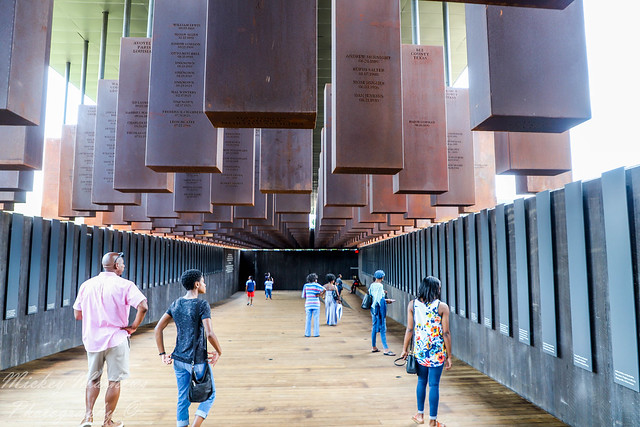
BTW, I'd be interested in this National Memorial for Peace & Justice in Montgomery, Alabama. This is the only memorial dedicated primarily for the victims of lynching in this nation.
It's February and you know what time it is...Black history month!
During the 1990s there was an HBO film with regards to one of the first major acts by a young Dr. Martin Luther King called Boycott. This movie portrayed the Montgomery Bus Boycott and it starred Jeffrey Wright as Dr. King who was pastor at Dexter Avenue Baptist Church.
I was reminded today (thanks to a passing mention by Mancow Muller on the radio) that while we remember Rosa Parks for her act of refusing to give up her seat on a local Montgomery, Alabama bus and getting booked for it. There was another young woman at that time who was already gearing up for this named Claudette Colvin. Unfortunately most of us might know who that woman is.
So aside from a wikipedia entry here's a 2009 NPR article about Ms. Colvin who was 15 when she began her own youthful protests against segregation. She didn't want to give up her seat on a bus to a white person. I can see this as her youth, but she wasn't wrong to do her protests. And on top of that her name was added to a court case regarding the bus segregation of Montgomery Browder vs. Gayle.
And according to NPR there are reasons we're not that familiar with Ms. Colvin's contributions:
There are many reasons why Claudette Colvin has been pretty much forgotten. She hardly ever told her story when she moved to New York City. In her new community, hardly anyone was talking about integration; instead, most people were talking about black enterprises, black power and Malcolm X.
When asked why she is little known and why everyone thinks only of Rosa Parks, Colvin says the NAACP and all the other black organizations felt Parks would be a good icon because "she was an adult. They didn't think teenagers would be reliable."
She also says Parks had the right hair and the right look.
"Her skin texture was the kind that people associate with the middle class," says Colvin. "She fit that profile."
Ah, a teenaged girl who didn't have the right skin color or hair texture wouldn't fit the right image. They were looking for the right optics to make this movement more relatable to the right people.
I recall seeing this in a book regarding the Civil Rights movement, perhaps a mention of a teenaged girl being pregnant. Don't recall a name and a long way from tell you what book it was. Perhaps that'll be the subject of another post sometime this month. Allow me to find that book.
Sort of ironic at roughly the same time two movies about these two pivotal historical figures of American history. Lyndon Baines Johnson was the 36th POTUS from the State of Texas and sadly elevated to the Presidency after the assassination of the 35th POTUS John F. Kennedy in Dallas, Texas. As for Thurgood Marshall, after a long legal career especially as chief counsel for the NAACP Legal Defense and Education Fund, President Johnson appointed Marshal to the US Supreme Court in 1967.
The events of both movies take place roughly 20 years apart. Marshall takes place in 1940 when he takes up the case of a Black man accused of raping a woman whose household employed him as a driver. As portrayed in the film he was going from town to town defending Blacks accused of crimes they didn't commit and doing whatever he could to insure they got fair trials.
In LBJ we see President Johnson campaigning behind the scenes for the Presidency. It seemed he was hesitant to really announce for the Democratic nomination in 1960 and expected to swoop in and steal it from the Kennedy. Well he had already been a powerful US Senator as Democratic Majority Leader. That unfortunately never carried him through and we see ultimately Kennedy - perhaps over the objection of his inner circle especially his brother Bobby - ask Johnson to run with him as Vice President.
While Marshall takes place during the course of 1940, LBJ basically takes place during the years 1959 to about 1963-64. And yes the assassination in Dallas was part of the story and then of course the aftermath of the assassination with Johnson taking over the Presidency in the wake of JFK's untimely death.
I want to share with you this column from a nephew of Sam Friedman - who was one of the main characters in Marshall. The columnist Roger Friedman takes time to reminds us that many of these movies that are based on real life events are fictionalized. The fiction of the stories told to us - especially since some of us weren't around to experience them first hand - are used to advance the plot.
Perhaps everything depicted in LBJ aside from what we know from history isn't entirely true. The same could be said for Marshall say for example neither Marshall nor Friedman got assaulted thanks to their involvement in this racially charged rap case. Also perhaps the future justice Marshall didn't actually tell his partner Friedman twice - "F*ck you". Those who do screenplays for historical movies or period pieces have to make them interesting to us the audience.
In my opinion both films had and they both relate to a certain period of American history. I could say Marshall the events took place before the Civil Rights movement heated up by the 1950s - 60s. Thurgood Marshall was already fighting the good fight long before Martin Luther King Jr arrived on the scene.
Conversely the end of the movie LBJ concerned President Lyndon Johnson's drive to pass his predecessor's - John F. Kennedy - civil rights legislation. The movie portrays Johnson as being able to relate to his fellow Southern Democrats to get them on board - though he likely didn't get them all on board. If it wasn't for his conduct of the Vietnam War, Johnson would've been one of our greatest Presidents.
Unfortunately I didn't see either film when they first came out. I can only wonder how received they were at the time of release. I could easily see Marshall as a Black movie, but it had a far more diverse crowd which isn't a bad thing. It's great to know a film like Marshall could potentially have broad appeal even if it's possible the intended audience had no interest. Especially at a time where there is further concern over the American justice system and their treatment of minorities.
As we look at this instagram post above of a young Martin Luther King Jr about to graduate from Morehouse. I want to share with you this commentary from PJ Media. Here's an excerpt:
Whoever King really was, whatever he sincerely believed, the image of King worth celebrating was presented in that 1963 speech. We aspire toward a world where children "will not be judged by the color of their skin but by the content of their character." That vision of racial reconciliation, of judgment according to merit, speaks to each and every human being. It's something we can and should get behind. It evokes the American spirit, a point emphasized when King cited the Declaration of Independence. Ninety-four percent of Americans came to favor King because they associate him with that dream, not because they support whatever radicalism he later embraced.
I haven't read enough of Dr. King's speeches or writings to know what his feelings are on any particular subjects. The Civil Rights Movement was necessary regardless of how it appears to be hijacked later. That article shows how Dr. King hit his peak through the Civil Rights Act and Voting Rights Act and he was able to defeat segregationists of the south.
Either way question we have to ask is whether or not Dr. King radicalized before his tragic death and even then does his work during the civil rights movement show a measure of a man.
Been having a rough time here in Chicago. In the past two months Chicago has seen increased protests thanks to first the Laquan McDonald story. He was shown on video being shot 16 times by a Chicago policeman who has been indicted in this incident.
I wrote over at The Sixth Ward about the protests that took place in downtown Chicago on Black Friday. Protestors shut down many of the shopping destinations on the Magnificent Mile not long after the release of police video in the McDonald case.
And here they still protest. Yesterday activists took to a police credit union on the city's west side for more protests. It wasn't just about police brutality or possibly unjustified police shootings:
The protesters said they had an additional mission: To reconfirm the values of the Rev. Martin Luther King Jr. Monday's federal holiday honoring him comes at a tumultuous time for Chicago's race relations, as city officials deal with the aftermath of the Laquan McDonald police shooting scandal and work to change a long-standing policy of keeping video evidence in police shootings under wraps.
The march on the Near West Side was intended to bring awareness about King’s belief that political equality can't be achieved without social and economic equality. Protesters called for black workers' rights, open housing for blacks, the revitalization of black communities and viable jobs.
Protester Gabe Frankel, of the Ravenswood neighborhood, said marching the day after the anniversary of King's birthday was meaningful, particularly after this week's release of surveillance video from the January 2013 police shooting of 17-year-old Cedrick Chatman.
"It's time to step back and reflect to see if we're meeting the pillars of (King's) goals," he said. "I think we're failing miserably."
In addition to protesting police brutality, dozens of activists joined the march to advocate for workers' rights, asking for people of all education and experience to have access to parental leave, paid sick leave, the right to unionize without retaliation and protections against discrimination based on race, gender, past drug offenses or incarceration.
This is how you draw many protesters not just 20 or 25. You probably do have to bring in many people with different ideas. So not just police brutality, but other social justice causes regarding employment or economic rights.
It almost reminds me of the Protest Warrior days - can't believe that site is still up. The protests recorded there were largely "peace" marches but they had an agenda which again took up social justice causes. I recall them talking about education, welfare, health care and they were at a peace march.
This underscores the point:
Kejioun Johnson, a McDonald's employee living in the Roseland neighborhood, said black communities won't be stabilized until black workers begin receiving fair and equal treatment.
"Low income, low-wage jobs and race (at Chicago's fast-food restaurants) are one and the same," he said. "Organizations like McDonald's suck our community dry. Today, we're here to reclaim history and continue fighting for our communities."
I see... This gives me a facepalm although I recognize that if this is truly a grass roots effort it's possible organizers weren't entirely able to do their homework.
Protesters succeeded in closing the credit union for regular business,
but they had done so because they believed they were "shutting down a
privately owned bank that the FOP is housed in," Pagan said during the
protest. The union, however, is housed in a building across the street.
In this nation to protest various causes is a right. It means there are those of us who don't like the fact that they protest. Sometimes though protests and activism results in change. Question is what kind of change are these activists seeking and what do they accomplish by shutting down a police credit union?
We looked at an HBCU on the brink of potential closure and today another that didn't survive. In this case, this school left behind a significant legacy as far as its history and dwindling alumni:
Storer started as a primary school in 1865, weathering racist attacks because it dared educate African Americans.
It graduated its last class in 1955, six decades ago, but Storer’s dwindling alumni return, year after year. Their descendants who never attended the school keep returning, too, even as the National Park Service, which now owns the campus, is making efforts to highlight Storer’s history.
The alumni and their descendants believe it’s their responsibility to honor those who persevered before them.
“Blacks and whites sacrificed blood, sweat and tears to make things happen,” says David Vollin, a zoning engineer with the District’s Department of Consumer and Regulatory Affairs.
Born during Reconstruction, Storer survived violence and was the site of other historic moments, including contributing to the birth of the modern civil rights era. And mostly, it created a refuge for young men and women. It’s a source of pride.
Over the weekend there was a lot of news out of Selma, Alabama commemorating a famous civil rights march that started in that town (which also spawned a major motion picture based on those events 50 years ago). The bridge that was largely a symbolic epicenter of that event was host to a 50 year anniversary march which featured two Presidents of the United States.
I got to find out why former President George W. Bush decided to make his way to Selma with his wife Laura Bush. It certainly was a cool gesture as I truly believe the fight for civil rights back in the 1960s or even today is a just bipartisan cause.
Partisanship with civil rights in my mind has no standing in the demonstrations of 50 to 60 years ago. A segment of the population back then were being denied their rights and it was unacceptable. Most people who saw how civil rights activists were treated on their TV screens back then realized the same thing, hopefully.
So I've been seeing complaints that President Bush had been cropped out of the pic with President Obama. The uncropped pic you see above and the cropped pic you may have seen via the NY Times.
Now I'm not going to add onto the speculation to why this occurred. The question is was it partisan. If it was then I would say petty because I truly believe civil rights was right regardless of any political leanings. So if this was merely partisan then the cropping was certainly petty. Although the photograph claims this hadn't been intentional at all.
I recognize that many may not like President Bush whose administration lasted from 2001 to 2009 mainly because of his execution of the War on Terror. At the same time a Republican former president and a sitting Democrat president - who also happens to be Black - marching at a commemoration of a 50 year old event should be good press. It only shows that no one party or ideology can say they are the party of civil rights.
On Sunday, I finally got a chance to see Selma. It's a movie based on the voting rights march between Selma and Montgomery, Alabama. It literally started off with a bang being inside of a church that literally blew up with four little girls inside.
It illustrated a lot of points for me in my belief in how successful the civil rights movement of the 1960s was. Mainly TV helped to advance the causes especially since many southern politicians and law enforcement proved to be very aggressive in combating the civil rights activism. Many people risked their lives and bodies for what was right for all Americans.
It's wrong to make it onerous for American citizens to be able to vote and have a voice in their own communities. It's onerous make a certain segment of the population to sit in the back of the bus. It's certainly onerous to have separate classrooms for Americans of different ethnicitis and even more to insure one group had a better education than the other.
I could go on & on, but the point I wanted to make is that in attempting to keep the system as it was the American people of the 1960s saw how brutal and violent it was. There were forces in Selma, Alabama who fought to keep the system that existed then. We could also theorize something else was going on in the lives of these law enforcement personnel that caused them to brutalize unarmed citizens.
Off of the front-line, the southern politicians knew this would become a political or PR nightmare. And we need not worry about only then Governor George Wallace, then President Lyndon Johnson who was clearly engaged with the civil rights movement wanted to move forward with other political objectives. In the end he had been forced to move voting rights forward instead of finding himself on the wrong side.
Perhaps in the end regardless of how many heads police cracked open and regardless of how the KKK terrorized the Black populations of the south the end was near for the south as they knew it. No aggression would change the tide and if the world was watching on TV - with only three major channels and no 24/7 news networks - perhaps all they did was make themselves villains.
Having seen this film at Ford City - which is my first visit there since the 1990s - it was a great time to pay a visit in a theater that had been recently refurbished. A great movie based on history and of course a reminder of where we have gone and what it takes to make changes in America.
You know right now on that front people are stirred up about what happened with Michael Brown in Missouri and Eric Garner in New York. Groups around the nation are engaging in acts of civil disobedience to bring attention to the unfortunate deaths of those two individuals in the hands of police.
To be sure, it's great to know that whatever the cause it's truly great to know how passionate many Americans are about these two cases. I have an opinion of them that have been shared here, however, other than some video evidence or even some eyewitness testimony I'll never really know what really happened. And unfortunately Brown and Garner aren't able to speak up for themselves.
Regardless, people are passionate in their beliefs that those two men deserve justice and that we must recognize that they have rights before their deaths. So at this point the debate is whether or not it was the right call to let those police officers off the hook legally in these deaths.
While I definitely could side with the officer involved in the Michael Brown shooting the case of Garner well that deserves more than the slap on the wrist than that officer got. A man died and apparently some of his last words showed that well the officers should've relented and yet he died. Even if he may have been cleared that shouldn't end the matter in my opinion.
Regardless there is a reason why I titled this post as I had.
It seems activism as being seen today has been reminiscent of the civil rights movememnt. For quite a while I had been convinced that this movement has been dying. It seemed to have been the province of those who had been fighting the stuggle way back when.
Americans have been passionate about many things over the years. Pick a subject government spending, right to bear arms, race relations, civil rights, integration, the fairness of business practices, privacy, etc. American's clearly want to make the nation as fair and safe for everyone as possible.
It's easy for me to dismiss these protests as being stirred up by race hustlers. Perhaps now we're seeing a new generation of activists taking their new roles and speaking up for what's right. My only hope is that they learn the lessons of those who came before them and ensure that that their activism truly results in changes that makes our land more fair and safe for everyone!
[VIDEO] Another reason to visit Jackson, Mississippi in the future. I've made many trip to the Magnolia State especially to my family's hometown of Mound Bayou, Mississippi in addition to other locales such as Port Gibson, Louisville, Greenville, and Tunica. In addition to at least passing through Vicksburg and Tupelo.
The places I've yet to visit in that state is Hattiesburg which has a family connection, Biloxi, and of course Jackson. A few years ago I had the opportunity to pay a visit to Jackson, however, time constraints nixed that opportunity!
C-Span speaks with Mississippi's Museum Division director of collections Cindy Garner who discusses the many items connected with that state's role in the Civil Rights Movement. So if there is going to be a Civil Rights Museum in Jackson, paying the capital city of Mississippi would be a worthwhile trip.